Quick Answer
The Soft Natural is one of five Natural subtypes in the Kibbe System — a combination of moderate Yang in the bone structure with a distinct Yin influence expressed through soft, curved body flesh. It reads as grounded and sensual at the same time. Clothing has to respect this dual energy: neither too structured, nor too delicate. Anyone who misidentifies here spends years fighting their own body.
There is no type in the Kibbe System that gets misidentified more often than the Soft Natural. The reason is clear: it sits exactly on the border between two very different energy worlds. The bones say Yang. The body says Yin. The result is a silhouette that many women experience as "contradictory" — and one that online quizzes, YouTube videos, and Instagram guides regularly confuse with Soft Dramatic, Flamboyant Natural, or even Theatrical Romantic. This article untangles the Soft Natural with the precision it deserves: systematically, without oversimplifying, with an eye for every detail that makes the difference in real consulting practice.
The Kibbe System in Context: What Natural Means
Before we can isolate the Soft Natural, we need to understand what defines the Natural family as a whole. In the Kibbe System, Natural isn't a body shape — it's an energetic principle. Natural types carry a moderate Yang dominance: their bones are wide, tending toward broad through the shoulders, with the overall line emphasized horizontally. The appearance is relaxed, solid, grounded. If Dramatic types "cut" and Romantic types "flow," then Natural types "stand." They carry weight in the best sense of the word.
David Kibbe describes the Natural family as the expression of a relaxed, unaffected body. There's no forced severity like the Dramatic, no overloaded curve like the Romantic. Natural is the body that produces a broader shoulder, a pronounced line, and an organic overall shape entirely on its own. That sounds simple — and it isn't. Because within the Natural family there are three subtypes: Flamboyant Natural, Natural (pure), and Soft Natural. Each carries the same Yang foundation, but with a different degree of Yin mixed in. And that mixture changes everything about how to choose clothing.
The Three Natural Subtypes Compared
To really grasp the Soft Natural, it helps to first look at the whole Natural family:
Flamboyant Natural (FN): The most pronounced Yang-Natural type. The bones are large, wide, often with sharp contours at the shoulder and jaw. The body is typically lean or muscular, with elongated proportions. Yin influence is minimal or absent altogether. Flamboyant Naturals read as athletic, tall, expansive. They need clothing that doesn't break their width: generous fabrics, loose cuts, nothing that constricts at the shoulder.
Natural (pure): The midpoint of the family. Here a moderate Yin influence begins to show — the bones are still wide and dominant, but the body can display slight curves. The overall appearance is balanced: neither as expansive as the FN, nor as sensually soft as the Soft Natural.
Soft Natural (SN): The most Yin-rich type in the Natural family. The Yang bones are present — broad shoulders, a wide upper body, sometimes a muscular or bony upper frame — but the body carries clear Yin qualities: soft body flesh, a defined waist or hip, curved contours, often a sensual overall presence. The face frequently shows a mix: strong lines paired with soft, full features. The Soft Natural isn't a small type — but it also doesn't read as heavy-boned as the Flamboyant Natural.
What Defines the Soft Natural: The Physical Characteristics
Kibbe defines types not through individual features but through the interplay of all the body's dimensions. There are five areas he analyzes systematically: bones, shoulders, upper body, waist/hip, and face. For the Soft Natural, each of these areas produces a specific picture.
Bones and Skeleton
The Soft Natural's bones are the fundamental Yang element. They are wide — that's the key term. Not necessarily large in the sense of oversized, but spatially expansive, reaching horizontally. Shoulder width often exceeds hip width. The collarbone is visibly prominent. Wrists tend to be broader than on Classic or Romantic types. The ankles can carry a certain fullness or breadth.
What distinguishes the Soft Natural's bones from the Flamboyant Natural's: they are rarely sharp. The FN often has striking, almost "hard" bone contours — sharp shoulder lines, prominent jawbones, bony fingers. On the Soft Natural, these edges are softened by flesh. The bones are wide, but embedded. You can sense them, you can see them — but they don't cut.
Shoulders
The Soft Natural's shoulders are one of the most defining features. They are broad and gently sloping. That's an important distinction from other broad-shouldered types: Dramatic types have straight, horizontal, almost military shoulders. Flamboyant Naturals have sweeping, often muscular shoulders. The Soft Natural has shoulders that are broader than average — but with a natural, gently dropped line that gives them something organic, unforced.
This shoulder shape matters because it makes many garments difficult: jackets with structured shoulders sit poorly. Shoulder pads intensify the Yang element too much. Strapless tops, on the other hand, often slip because the broad shoulder offers no natural anchor. The ideal top for the Soft Natural lets the shoulder breathe freely — no artificial framing, no forced support, but also no slipping.
Upper Body and Flesh
This is where the Yin begins. The Soft Natural's upper body isn't lean-muscular like the Flamboyant Natural's — it carries body fullness. This fullness is soft, rounded, organic. It's distributed across the chest, stomach, back. It doesn't necessarily come from being overweight — it's an intrinsic quality of the body type. Even slender Soft Naturals have a certain softness through the upper body, a gentle roundness rather than a straight, sculpted torso.
Kibbe emphasizes that this fleshiness in the Soft Natural shouldn't be fought. It's part of the line. Clothing that flattens the stomach, compresses the chest, or presses the upper body into rigid structures works against the body — and it shows. The Soft Natural's body looks its best when it can breathe. The fullness isn't a flaw to be corrected. It's information.
Waist, Hip, and Lower Body
The Soft Natural's waist is present, but not sharply defined. There's an indentation — more than on the Flamboyant Natural, who often has little to no visible waist — but the waist is soft, not cinched the way it is on Romantic or Soft Dramatic types. Dresses that heavily emphasize or lace in the waist read as too constructed on a Soft Natural.
The hip follows a similar logic: it's present, often broader than on the FN, but not dramatically curved the way it is on Romantic types. The ratio of shoulder to hip is an important indicator: on the Soft Natural, the shoulders and hips are often similarly wide, sometimes with a slight shoulder emphasis. The lower body — thighs, calves — typically carries a soft fullness that matches the upper body.
Face and Facial Features
A Soft Natural's face shows a characteristic mix of Yang bone and Yin flesh. The bone structure is wide: an overall broad face, often with prominent cheekbones, a wide jaw, or a defined chin. At the same time, the face is covered in soft flesh: round cheeks, full lips, a soft nose shape, slightly fleshy eyelids or temples.
The result is often a face that's hard to read at a glance. It doesn't look sharp like Dramatic, doesn't look childlike-round like Gamine, doesn't look overwhelmingly soft like Romantic — it's a striking face with a warm presence. Many Soft Natural women carry a sensual, earthy quality that's reflected in the face: the bones give contour, the flesh gives warmth.
Soft Natural vs. Similar Types: The Critical Differences
The Soft Natural is most often confused with four other types: Flamboyant Natural, Soft Dramatic, Theatrical Romantic, and Natural (pure). Each of these mix-ups leads to systematically wrong clothing choices — which is why the precise distinctions are worth working through.
Soft Natural vs. Flamboyant Natural
This is the most common confusion, because both types share broad shoulders, a pronounced bone skeleton, and a horizontal emphasis. The difference lies in the Yin proportion:
The Flamboyant Natural has practically no Yin influence. Their body is elongated or athletic, with little to no soft body fullness. The waist is barely defined. The bones are often visibly sharp — wide, angular shoulders, prominent collarbones, pronounced limbs. The face is characteristic: wide, sometimes rectangular, with clear edges. The overall picture is imposing, evenly long from top to bottom.
The Soft Natural, by contrast, shows clear Yin softness: body fullness, visible curves, at least a hint of a waist, a curved profile. It reads as more sensual, more earthy, more feminine in the classic sense — while the FN reads more neutral-athletic or androgynous-strong. In terms of styling, that means: what works for the FN (loose, structureless clothing with no shaping at all) can make the Soft Natural look boxy and heavy.
Soft Natural vs. Soft Dramatic
This confusion happens because both types have a strong vertical or horizontal presence and both carry a Yin body. The difference lies in the bone structure and height:
The Soft Dramatic is tall — often over 5'7" — with long, sharp bones. Their foundation is pure Yang: sharp, long lines, often with a strong vertical emphasis. The Yin softness is added on top, but it sits on a Yang-based frame of long, striking bones. The SD needs drama in their clothing — they "carry" ruffles, dramatic necklines, bold prints.
The Soft Natural has no long, sharp bones. Their bones are wide, but not necessarily long. They're often of medium height. Their Yin softness sits on a broad but organic frame. They don't need drama — they need naturalness with gentle body emphasis. Too much drama overwhelms their earthy, relaxed character.
Soft Natural vs. Theatrical Romantic
This confusion arises when a Soft Natural woman has a very Yin-dominant body — a lot of fullness, pronounced curves — and therefore assumes she belongs in the Romantic category. The difference is the bone and shoulder structure:
The Theatrical Romantic has small, soft bones — a small, delicate skeleton covered in soft body fullness. The shoulders are small, rounded, narrow. The TR is often shorter in stature. Everything about them is Yin, with a slight Yang mixed into the face.
The Soft Natural has a broad skeleton. Even when her body is very soft and curvy, you can feel the wide Yang foundation underneath. The shoulders are broader, the bones more spacious. A useful test: TR women can wear structured, fitted clothing if it's cut curvy enough. Soft Naturals fundamentally struggle with tight, structured garments — because the broad shoulders and wide bone system never fit comfortably into tight constructions.
Soft Natural vs. Natural (pure)
This distinction is the subtlest. Both have a Natural foundation — broad shoulders, a wide skeleton, horizontal emphasis. The difference lies in the intensity of the Yin influence:
The Natural (pure) shows little to moderate Yin softness. The body shape tends to be straighter or slightly curvy, the waist barely defined. The face is wide but clearly structured, without much soft fullness.
The Soft Natural shows clear Yin softness in both body and face. If a Natural woman has a very soft, rounded body, a lot of curve, a soft face — she's likely Soft Natural. The line isn't always sharp, but in practice this is the point that decides whether flowing fabrics with gentle shaping (SN) or loose, relaxed cuts with no waist definition (N) work best.
The Yin-Yang Duality of the Soft Natural
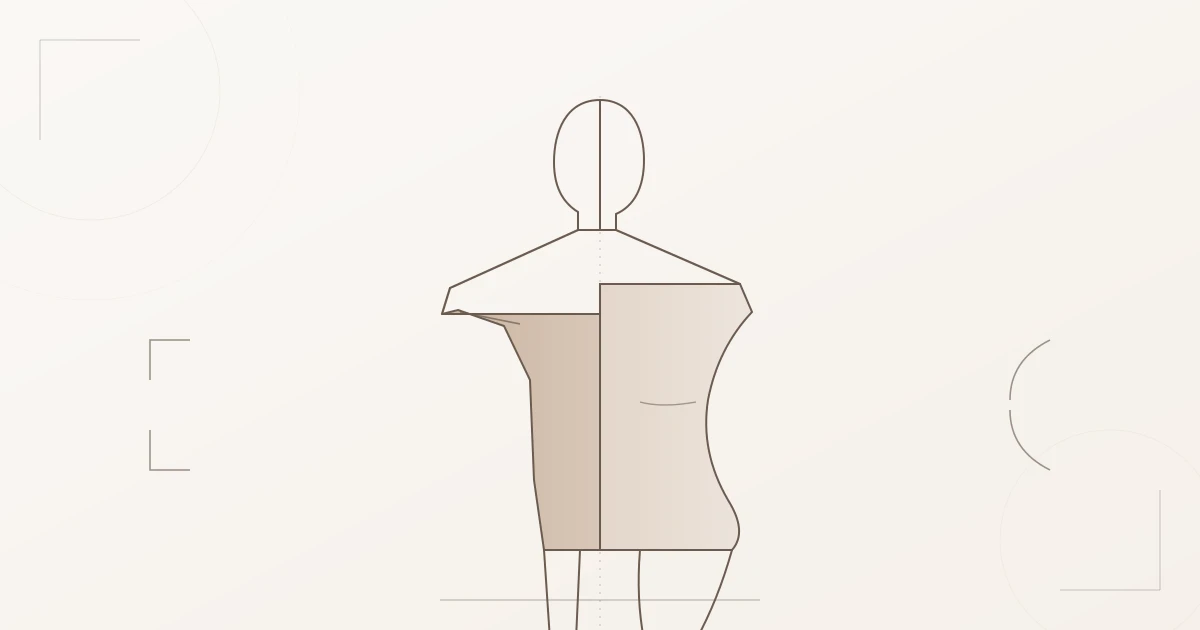
The Soft Natural is the clearest expression of a Yang-Yin conflict within the Natural family. To truly understand how clothing works for this type, you have to grasp what this duality means — not as abstract theory, but as a concrete styling principle.
Yang in the Soft Natural shows up horizontally: in the broad shoulders, the wide bone system, the body's tendency to expand outward rather than stretch upward. It's the element that often makes clothing with tight waist shaping or an A-line uncomfortable: the body gets forced into vertical or rounded shapes that contradict its horizontal nature.
Yin in the Soft Natural shows up in softness: in the body fullness, the gentle curves, the organic profile. It's the element that makes clothing with no body emphasis at all unflattering: when a Soft Natural woman wears completely structureless, boxy clothing (the way it's ideal for the FN), she loses all her natural line — she reads as heavier, bulkier, less present.
The solution isn't dominance of either element, but addressing them together. Clothing that works for the Soft Natural recognizes and respects both sides at once: wide enough for the Yang bones, soft enough for the Yin flesh, and gently showing the waist — without forcing it.
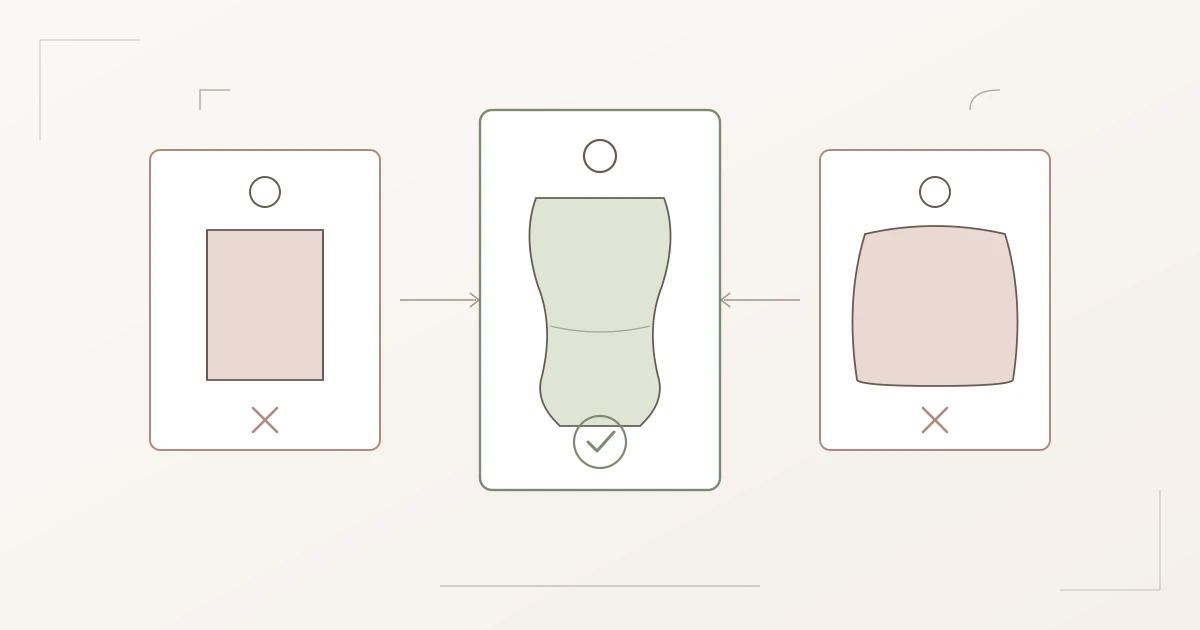
The mistake many Soft Naturals make is treating it as either/or: either they dress entirely in loose, natural-style pieces and lose their curves, or they try to play up romance and end up fighting their own breadth. The truth sits exactly between these two poles.
Dressing the Soft Natural: What Actually Works
No other part of this article is more hands-on than this one. This isn't about principles — it's about concrete decisions in front of the closet. What do you pick up? What do you leave on the hanger? And why?
The Ideal Silhouette
The basic rule is: soft, flowing, with gentle body emphasis. That means no tight clothing — but also no structureless box shape. The Soft Natural needs clothing that:
- Doesn't emphasize the broad shoulder with padding or rigid construction
- Leaves the body in its natural width — neither constricting nor hiding it
- Gently indicates the waist — through the cut of the fabric or a soft belt, not through structured boning or zippers
- Skims past the body's curves rather than pulling or bunching against them
- Avoids sharp horizontal cuts along its length that would interrupt the natural line
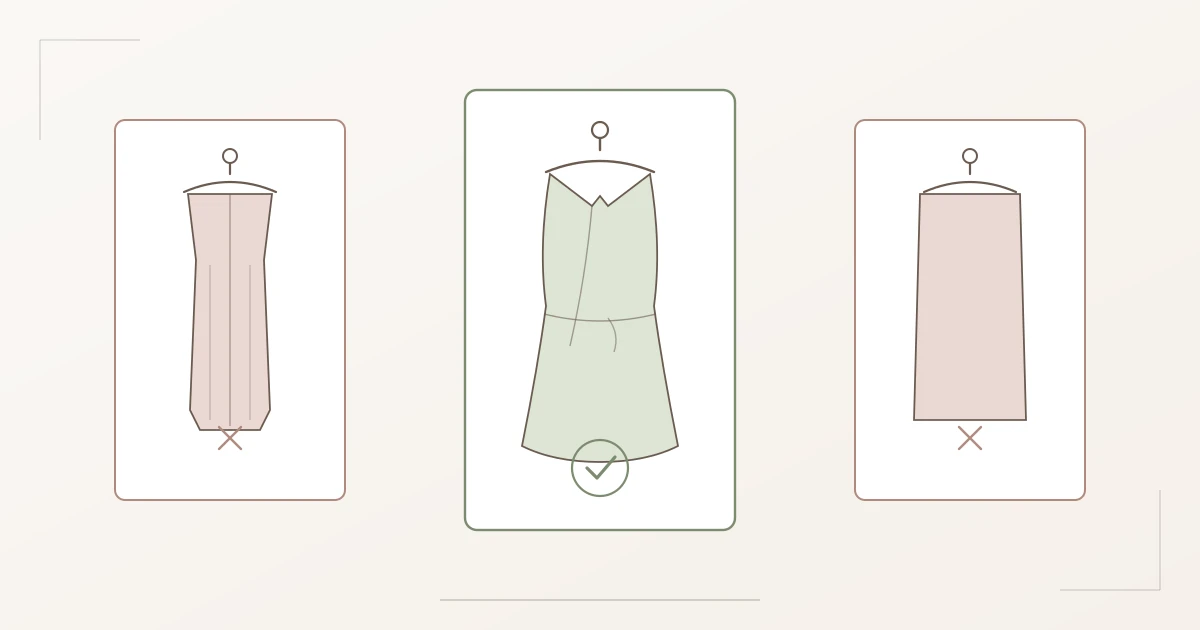
In concrete terms, that means: wrap dresses are one of the best options for the Soft Natural. They create a soft V-line at the neckline, fall naturally at the shoulder, and show the waist through the wrap shape without cinching. Flowing maxi dresses with a tie belt or elastic waistband work well. A-line dresses can work if the shoulder area isn't structured — but the classic A-line with an emphasized hip line can call up too much of the Yin element.
Fabrics and Materials
Fabric choice is critical for the Soft Natural — possibly more important than for almost any other type. Hard, stiff, structured materials work against the body's Yang bone character and intensify the unwanted boxiness. Soft, flowing fabrics, on the other hand, let the body shape them — they follow the natural line instead of dominating it.
Ideal fabrics:
- Viscose and modal — drape beautifully, skim the body without clinging
- Soft jersey — moves with the body and shows the waist gently
- Silk and silk satin — for special occasions, glides over the body
- Soft linen (unstarched) — for summer, with a natural crease texture
- Chiffon — as an overlay, for lightness
- Soft cashmere and knit materials — in loose, non-figure-hugging cuts
- Tencel and natural blends — with a soft drape
Problematic fabrics:
- Stiff cotton (oxford, poplin) — resists the body, reads as boxy
- Structured tweed — stiffens the silhouette unnecessarily
- Polyester with a crease effect — too artificial, looks cheap on the soft body
- Leather in large panels — too dominant, too hard
- Heavy denim (tight cuts) — cinches in, emphasizes width instead of curve
Dresses and Skirts
Dresses are a strength for the Soft Natural — when cut correctly. The best dresses have gentle waist shaping (no rigid boning), a flowing skirt, and a shoulder area that isn't overly constructed. V-necks and round necklines work well. Off-shoulder styles can be lovely if the cut lets the body flow naturally. Structured, tailored dresses with a center-body zipper often read as too stiff.
For skirts: knee-length to midi flowing skirts are ideal. Pencil skirts are problematic — they cinch the lower body and create a sharp contrast against the broad shoulder line that disrupts the natural balance. Maxi skirts with a soft drape work well, as long as they aren't too tight at the hip.
Tops and Blouses
The ideal top for the Soft Natural is wide enough for the shoulder, falls organically over the torso, and creates no hard edge. Soft blouses with ruffle details at the neckline or sleeves can be beautiful — they add to the Yin proportion without overwhelming the Yang bone. Tucked-in styles only work with a soft waistband — never with a hard, tightly cinched belt.
Problematic pieces include button-downs in stiff fabric, fitted blazers with shoulder pads, crop tops (which sharply interrupt the horizontal line), and tight-fitting bodysuit styles that wrap the upper body like armor.
Pants and Jeans
Pants work well for Soft Naturals when they don't create a rigid silhouette. Wide, flowing pants (palazzo, Marlene-style) are excellent — they leave the legs free, create no tension at the hip, and complement the broad upper body harmoniously. Elastic waistbands or soft belt options are better than stiff button closures with zippers.
Very skinny jeans are the classic wrong purchase: they emphasize the fullness of the thigh and create a sharp contrast with the broad shoulder. Straight-leg jeans in a softer denim, lightly fitted to the body without cinching, work far better. The best test: pants should go on without effort — if you're fighting at the hip or thigh, the cut is wrong.
Accessories and Details
Accessories should support the Soft Natural's soft, organic energy. That means:
- Belts: Soft, wide, or with an organic texture. No narrow, taut leather belt that cinches the waist — that reads as harsh on the soft body.
- Jewelry: Organic shapes, soft metals (gold, bronze), natural materials (wood, leather, shell). Large, angular metal jewelry pieces don't suit the SN's softness.
- Bags: Soft leather bags, hobo bags, structureless totes. Stiff, boxy handbags read as jarring.
- Shoes: Soft, organic shapes. Block heels or flat sandals work well. Stilettos can overplay the Yin proportion and throw off the balance. Chunky, heavy boots can intensify the Yang if they're very structured.
- Scarves and wraps: Soft materials, draped loosely around the shoulder. No stiff silk scarf that emphasizes the shoulder structure.
Prints, Colors, and Patterns
Kibbe himself emphasizes that color and print matter less than silhouette and fabric — but they still play a role, because they can either support or sabotage the body's visual energy.
Prints
For the Soft Natural, organic, flowing prints are ideal: florals in a soft rendering (not too geometric, not too small-scale and repetitive), soft abstract patterns, paisley-style designs, watercolor-like gradients. Geometric prints — crisp checks, strict stripes, hard grids — bring a Yang element into the look that can clash with the Yin body. Small, tightly packed patterns (micro-prints) can fragment the body's softness and make it look busy.
Colors
The Soft Natural woman often looks best in muted, warm, earthy tones — not because bright colors are wrong, but because these tones support the type's organic, grounded-sensual energy most strongly. Camel, terracotta, rust, chocolate brown, olive green, cognac, sandy beige — these are colors that harmonize with the body rather than fight it.
Bright, clear, cool colors (ice blue, mint green, lime yellow) can look lovely, but typically need a warm undertone in skin and hair to ground them. Pure white can add too much Yin on a very soft body and isolate the shoulders' Yang. Black reads as neutral for many Soft Naturals and works well, especially in flowing cuts.
What the Soft Natural Should Avoid
Just as important as knowing what works is knowing what fails systematically. There are certain styling choices that are almost always problematic for the Soft Natural — regardless of the current trend, regardless of how good the piece looked on the mannequin.
Structured Waist Shaping
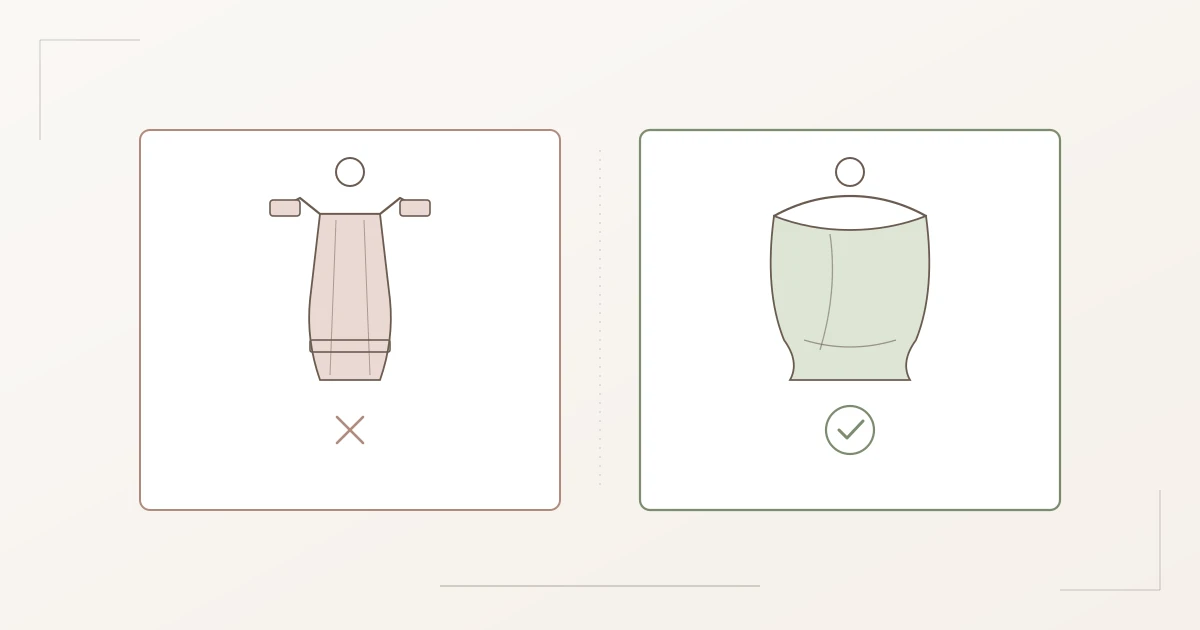
The biggest problem. Dresses and blouses that force the waist with hard boning, built-in structural elements, or stiff belts create a visual conflict on the Soft Natural: the broad shoulders and wide bone system resist the construction. The result isn't an elegant hourglass — it's a body fighting its own clothing. Or put another way: you see the construction, not the body.
Dresses and Tops with Shoulder Pads
Shoulder pads are designed for types with narrow shoulders who want to visually broaden them — or for Dramatic types building out their vertical line. For the Soft Natural, whose shoulders are already broad, a shoulder pad means: the width doesn't change, it just gets artificially stiffened. The skeleton's Yang gets emphasized without integrating the Yin softness. The result reads as broad and rigid.
Very Skimpy, Body-Hugging Clothing
A common mistake: because the Soft Natural has curves, it's assumed that tight clothing shows them off. That's partly true — but tight clothing isn't the same as body-flattering clothing in the right cut. Dresses that stretch taut across the shoulders, chest, and stomach don't show off the curves — they show the strain. The fabric fights the broad skeleton. Instead of a harmonious silhouette, you get a picture of tightness and pressure.
Very Loose, Structureless Clothing
The opposite mistake: because many Soft Naturals know tight clothing doesn't work, they choose completely structureless, boxy pieces instead. That doesn't solve the problem, though — it amplifies the body's horizontal width, since no waist is visible anymore, and the lower body's fullness reads as disproportionate. Boxy tops and oversized dresses make the SN look larger and broader — not more flowing.
Very Short Skirt Lengths
Miniskirts and very short shorts create a sharp horizontal edge at the center of the body that interrupts the Soft Natural's natural line. The shortness also contrasts with the width of the shoulders — the proportion reads as out of balance. That doesn't mean the SN can't show her legs — knee-length and just above the knee are possible — but mini is structurally difficult.
A-Lines with an Emphasized Hip
Classic A-line dresses with a wide, flared skirt can isolate the shoulders' Yang. They create a kind of "triangle" — broad shoulder up top, wide skirt at the bottom, with an artificial waist as a sharp transition. That doesn't match the Soft Natural's organic line, which needs flowing transitions.
Notable Soft Natural Examples
Once you understand what makes a Soft Natural, real-world examples help translate the abstract system into visible reality. The following public figures are frequently identified as Soft Natural within the Kibbe community — though it's worth noting that any public type assignment involves some interpretation and isn't a definitive statement from Kibbe himself.
Jennifer Aniston
Jennifer Aniston is one of the most frequently cited Soft Natural examples. Her broad shoulders, relaxed body build, and gentle, understated curve fit the profile. What's especially clear with her: she looks her best in flowing, naturally cut dresses without heavy waist shaping. Her iconic looks — wrap dresses, flowing blouses, soft trousers — are practically a masterclass in Soft Natural styling. When she wears tight, structured looks, she seems oddly constrained, as if the clothes were taking away her body language.
Cameron Diaz
Cameron Diaz is also frequently seen as Soft Natural. Her broad shoulder structure, relaxed athletic-soft body, and wide, warm face fit the profile. Her best-known red-carpet looks often show exactly this tension: she reads as strongest in soft, flowing gowns and most uncomfortable in heavily structured couture pieces.
Gal Gadot
Gal Gadot is an interesting example that hints at the border between Soft Natural and Flamboyant Natural. Her broad shoulders, athletic body, and relaxed, natural presence fit the Natural spectrum. Whether she leans more FN or SN depends on how much Yin softness her body shows at rest. She works well in soft, flowing dresses — but also in more structured pieces, which points to a stronger Yang proportion.
Shakira
Shakira is a much-discussed example. Her shoulders are broad relative to her height, her waist is softly defined, her curves are clearly present — but resting on a broad bone system. That's classic Soft Natural. What stands out with her: in her music videos she often wears very tight clothing that emphasizes her curves — and you can see the strain in the fabric. When she appears in more flowing, softer clothing, her body reads as far more harmonious.
Beyoncé
Beyoncé is another frequently cited example — though she's also discussed as Soft Dramatic within the community. Her broad shoulders, curvy, full body, and strong, earthy presence fit the Soft Natural spectrum when you factor in her height and bone structure. Regardless of the exact type assignment, she's a prime example of how Yin and Yang can coexist in one body — and how wonderful that looks when the clothing respects both.
Adele
Adele is discussed in the Kibbe community as either Soft Natural or Soft Dramatic. Her broad shoulder structure, pronounced body fullness, and warm, grounded presence fit both candidacies. Her styling has evolved considerably over the years — and her most convincing looks always show flowing, gently shaped dresses without excessive construction.
Common Mistakes in Self-Typing
Most women who identify themselves as Soft Natural either get it right or fall into one of the following typical traps. It's worth naming these explicitly — because they recur systematically and lead to frustrating clothing decisions.
Mistake 1: Typing by Weight
The most common mistake: a woman has body fullness, so she chooses Soft Natural — or she's slender, so she rules Soft Natural out. Kibbe types aren't weight categories. A slender woman with broad shoulders, a soft body surface, and a relaxed curve is Soft Natural, no matter what the scale says. An overweight woman with small bones, rounded shoulders, and lush fullness may well be Theatrical Romantic. Weight adds fullness, but it doesn't change the underlying bone structure or the body's intrinsic energy.
Mistake 2: Typing by Body Parts Instead of Energies
"I have broad shoulders, so I'm Natural." Not necessarily. Broad shoulders occur across several types. Dramatic types often have broad (if straight and sharp) shoulders. Flamboyant Natural has very broad shoulders. The shoulder shape — sloping vs. straight vs. muscular — is an important distinction. Shoulder width alone isn't a sufficient clue.
Mistake 3: Treating Online Quizzes as Authoritative
The vast majority of Kibbe quizzes available online don't translate Kibbe's system correctly. They translate the questions into body-measurement categories (hip width in inches, shoulder width in inches) instead of visual energies. The result is systematically inaccurate. Kibbe himself emphasized that his system works not through measuring but through seeing — through an overall reading of the body in motion, in clothing, under different lighting conditions.
Mistake 4: Choosing the Type You Wish For
There's a well-known psychological bias in the Kibbe community: women tend to choose the type they'd like to belong to — not the one they actually belong to. Romantic sounds more glamorous than Natural. Dramatic sounds more imposing than Classic. That leads Soft Naturals to identify as Soft Dramatic because it sounds more dramatic — and then spend years fighting clothing designed for long, sharp bones.
Mistake 5: Ignoring the Face
Kibbe treats the face as an equally weighted area of analysis. Many online resources leave the face out or treat it as secondary. That's a mistake. A Soft Natural face — wide, warm, with a mix of clear bones and soft flesh — is an important determining factor. If a woman's face shows noticeably more Yang sharpness than her body, that can point to a different type.
Closet Check Tool
Your Closet — Analyzed Now
Before you buy anything new: do you really know what's in your closet? Our free Closet Check tool walks you through a structured analysis in 10 minutes — piece by piece. You'll see what's actually working, what can go, and which gaps you truly need to fill.
Start the Closet Check →How to Build a Soft Natural Wardrobe
A Soft Natural wardrobe isn't complicated — once you understand what works. The goal is a wardrobe that combines three qualities: comfort (the clothes don't fight the body), presence (the body is visible in its best line), and versatility (the pieces mix and match with each other).
The Core Wardrobe
Every Soft Natural wardrobe should include these key pieces:
1. The wrap dress: The wrap dress is the ideal Soft Natural dress. It creates a soft V-line, shows the waist through the wrap effect without cinching, and comes in soft fabrics. A wrap dress in a warm, earthy tone — caramel, terracotta, mustard yellow — is the backbone of any SN wardrobe.
2. The wide, flowing pant: A Marlene pant or palazzo pant in viscose or lightweight linen allows freedom of movement, creates no tightness at the hip or thigh, and pairs with soft blouses and tops. In black or navy, it's an all-rounder.
3. The soft blouse: A loose blouse, unstructured at the shoulders, in a soft texture — silk, viscose, chiffon — is the counterpart to the pant. Best with a soft V-neck or round neckline, with no hard collar element.
4. The flowing maxi dress: For spring and summer, a maxi dress with a soft waistband or tie belt is unbeatable. It creates a vertical line, gently indicates the waist, and moves with the body instead of against it.
5. The soft cardigan or knit jacket: As a layer over blouses or dresses. Structureless, in an earthy tone, long enough not to cut off at the waist.
6. The straight dress with a soft drape: A simple shift or tunic dress in soft fabric that leaves the shoulder free and skims gently past the body. Ideal for any day when you just want to get dressed and look beautiful with no effort.
The Layering Strategy
Soft Naturals benefit from a layering strategy: combining several soft layers instead of one single, heavily constructed outfit. A flowing top over wide pants, plus an open cardigan and a soft wrap — that creates depth and movement without imposing structure. All the layers should be made of similarly soft fabrics, so no single element reads as stiff.
Investments vs. Quick Buys
Where should a Soft Natural woman spend more money? On fabric. A cheap polyester copy of a flowing dress drapes differently than the real silk piece — and on a Soft Natural, you can tell the difference. Fabric makes or breaks the silhouette. A wrap dress in real viscose jersey might cost three times as much as a fast-fashion version, but it drapes three times better.
Less critical: accessories. Soft leather bags, organic jewelry, wide scarves — these can be inexpensive too, as long as the material is soft.
Makeup and Hair for the Soft Natural
Kibbe himself also made statements about hairstyle and makeup style that relate to the type's overall appearance. These aren't dogma — but they do point in a direction.
Hair
The Soft Natural benefits from hairstyles that emphasize volume and softness. Very sleek, very precise hairstyles (high updos, ruler-straight ponytails, severe bobs) don't suit the type's earthy, soft energy. Loose waves, soft natural curls, a casually pinned-up bun with loose strands falling out — these are hairstyles that support the Soft Natural energy.
Length plays a secondary role — but very short, very structured cuts can overpower the shoulders' Yang. Medium to long hair is more flattering for many Soft Naturals.
Makeup
Soft Naturals look best in warm, earthy makeup: soft brown tones on the eye, warm nude or terracotta lips, golden highlighter. Very cool, very crisp makeup looks (ice-blue eyeshadow, pink-white highlighter, bright coral) often clash with the type's organic-warm presence. The goal is makeup that reads as a natural deepening of one's own features — not like a second mask laid on top.
Heavy contouring meant to make the face look sharper and more angular is also counterproductive. The Soft Natural already has her own bone contours from the Yang skeleton — they don't need to be redrawn. What's missing is warmth — and that comes from soft blush, warm brown tones, and a golden base.
The Soft Natural in Practice: Frequently Asked Questions
Can a Soft Natural Be Slender?
Yes, absolutely. Kibbe types aren't weight categories. A slender woman can be a Soft Natural if she has broad shoulders, a wide bone system, and a natural softness in the body — even if that softness is less pronounced visibly at a leaner weight. Type is determined by the underlying bone structure and intrinsic body build, not by current body condition.
Does a Soft Natural Have to Always Wear Dresses?
No. Dresses are advantageous for many Soft Naturals because they often offer the ideal combination of a soft silhouette and gentle waist shaping. But pants outfits absolutely work — as long as the pants are cut wide enough and the tops aren't too constructed. Soft Marlene pants, flowing blouses, soft jackets — a pants-based wardrobe for the Soft Natural is entirely possible, and beautiful.
Does Athleisure Work for the Soft Natural?
With some limits. Athletic clothing made from stretch materials can flatter the Soft Natural's body well, as long as it isn't too tight. Wide-cut yoga pants, oversized hoodies in soft material, flowing sport dresses — these can work. Tight sports bras with structured straps, stiff track pants, and skimpy shorts, on the other hand, emphasize the broad, structured Yang element without integrating the softness.
How Should the Soft Natural Approach Trends?
Trends aren't a good primary compass for any Kibbe type — and they're especially tricky for the Soft Natural, because fashion trends tend to be either very structured (shoulder pads, fitted blazers, corset elements) or very loose (oversized, boxy). Neither extreme suits the Soft Natural. The strategy is: use trends as inspiration, then ask — does this trend exist in a soft fabric, in a flowing cut, without excessive construction? If yes, adapt it. If not, skip it.
How Do I Recognize My Type If I'm Unsure?
That's the most honest question. And the honest answer is: self-typing is difficult. The Kibbe type looks at you as a whole presence — in motion, under different lighting, in different garments. A mirror shows you yourself statically, head-on, in one particular light. Professional consultation is the most reliable path. If that isn't possible: record videos of yourself — in several outfits, from different angles. Compare what happens in your body language and silhouette.
The Psychological Dimension: Why the Soft Natural Doesn't Dare Be Herself
There's an interesting psychological observation from Kibbe consulting practice: many Soft Natural women spend years trapped in a clothing style that doesn't suit them — not out of ignorance, but out of an inner resistance to what their body expresses.
The Soft Natural is a full, sensual, broad body type. In a culture that promotes slim-and-straight as the ideal, the Soft Natural body can feel like it's "too much" — too broad, too soft, too present. Many women's reaction: they dress to look smaller, slimmer, less noticeable. They choose A-lines because A-lines hide the hip. They choose dark colors because dark is slimming. They choose tight clothing because tight clothing "shows off your figure" — under the assumption that this is the same thing as looking good.
The problem is: all of these strategies work against the body. The broad shoulders and wide skeleton can't be hidden by clothing — they're there. When you try to hide them, you end up with disharmonious outfits, where the clothing pulls in one direction and the body in the other. The body doesn't look smaller — it looks uncomfortable.
Kibbe repeatedly emphasized: the type isn't the problem. The clothing is the problem — when it doesn't match the type. When a Soft Natural stops working against her body and starts working with it, something remarkable happens: she doesn't just look better. She feels better. She feels like herself.
Soft Natural and Fashion History: When This Type Was Celebrated
It's no coincidence that certain eras of fashion history were especially flattering for Soft Natural women. The late 1960s and 1970s — with their fondness for flowing, earthy, organic fashion — produced dresses that seemed designed for the Soft Natural. Maxi dresses in natural fabrics, wrap dresses in the Diane von Furstenberg style, wide flared pants with organic prints.
By contrast, the 1980s — with shoulder pads, stiff blazers, the fitted power-dressing aesthetic — were an era in which Soft Natural women were systematically dressed wrong. The shoulder pads intensified the Yang elements without respecting the Yin softness. The result: photos from the '80s show many women looking angular and heavy, even though their bodies had plenty of curve.
The 2010s boho wave was flattering again: flowing fabrics, earthy colors, organic cuts. Current 2020s fashion is mixed — there are trends (oversized, structured shoulder, corsetry) that are difficult, as well as strong currents (soft knit dresses, organic prints, flowing co-ords) that suit the Soft Natural body.
Summary: The Soft Natural Styling Manifesto
Everything described in this article can be distilled into a few core principles:
Recognize the dual nature. You have Yang bones and a Yin body. Both are real, both are you. Clothing that addresses only one side fails.
Choose fabrics like a material curator. Fabric is the first decision for the Soft Natural, not the last. Soft, flowing, organic. Always.
Waist shaping yes — construction no. The waist may be visible, but it should emerge visibly — not be forced. A soft belt, a wrap cut, a flowing drape — yes. Boning, corsetry, a stiff waist seam — no.
Let the shoulder be free. The broad shoulder needs no reinforcement. No shoulder pads, no tight raglan sleeves, no narrow straps. Let the shoulder exist in its natural shape.
Organic over geometric. In prints, in cuts, in accessories. Curves over edges. Soft lines over sharp lines.
An earthy palette as the base. Warm, grounded, sensual. Terracotta, camel, olive green, cognac, warm beige — that's the world where a Soft Natural shows up strongest.
Allow for movement. Clothing that moves with you rather than against you is the goal. Stiff constructions that feel like armor when you walk have no place in a Soft Natural wardrobe.
The Soft Natural isn't a type that has to settle for compromises. It's a type with a very clear, very beautiful language of its own — one that gets in its own way the most when it fights that language. Anyone who stops correcting that language and starts speaking it discovers just how effortless and convincing style can be.
Your Soft Natural Style Starts Here
Do You Really Know Which Type You Are?
This article gave you the theory. The next step is practice: take the free Kibbe quiz — or have Jola determine your type professionally.
No account · No email · Result shown instantly
Read next: The Soft Natural's most common mix-up is the Romantic — the same curves, but a completely different bone structure. The complete deep-dive: Romantic Kibbe Type — Analysis & Styling Guide.